Beyond the Dashboard: Managing the Human Side of Supply Chain Automation
Wednesday, 6 Aug 2025
|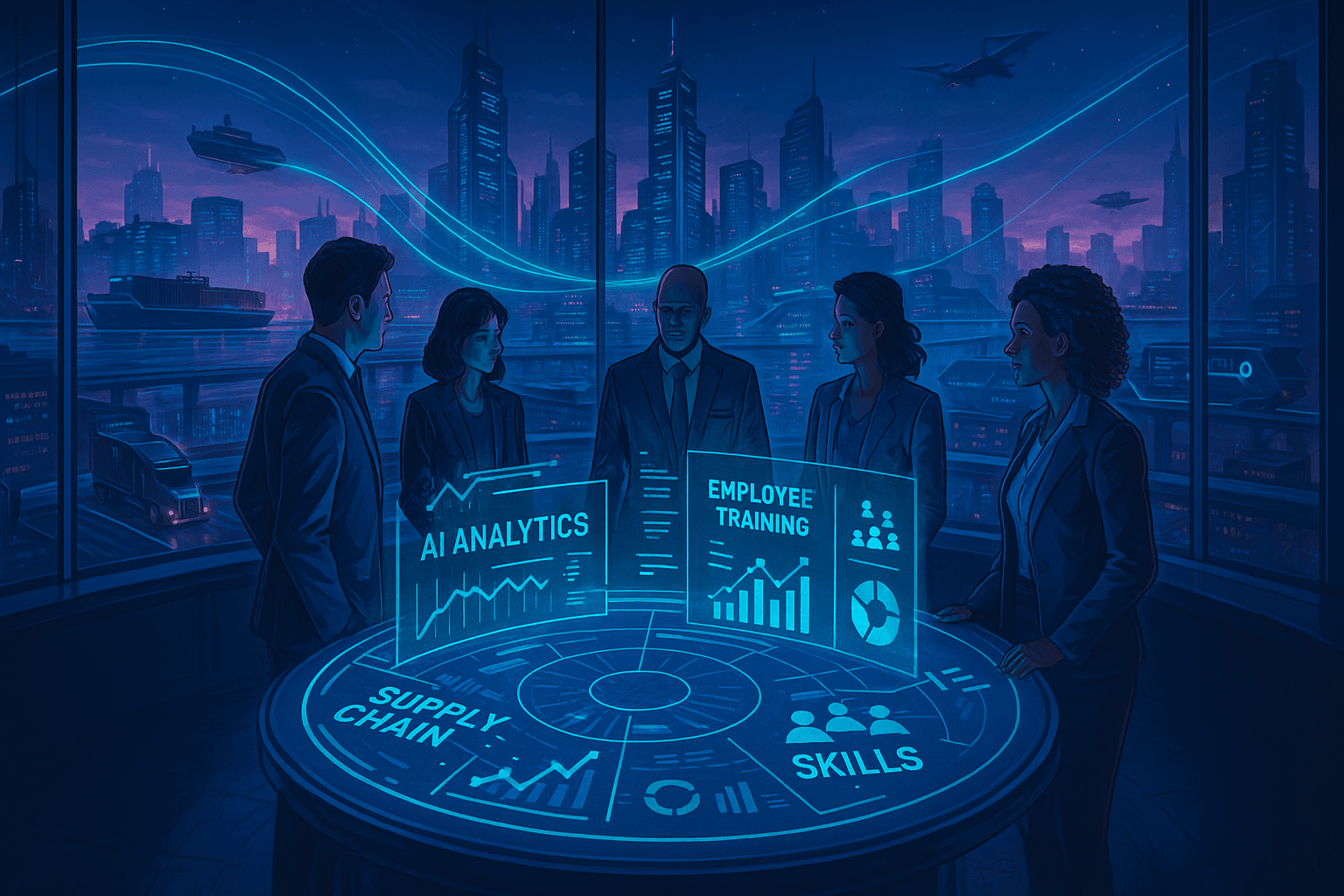
When most conversations about supply chain automation happen, they revolve around dashboards, AI features, and system capabilities. But any leader who has lived through a digital transformation knows the uncomfortable truth:
Technology is only 20% of the solution. The other 80% is people, processes, and culture.
Ignoring the human dimension is why so many automation projects fail. It’s not because the tech didn’t work—it’s because adoption stalled, resistance grew, and the promised ROI never materialized.
If you’re leading a supply chain transformation, managing the human side of automation isn’t a “nice-to-have”—it’s your single biggest success factor.
Step 1: De-Risking the Narrative — From Replacement to Augmentation
When AI enters the conversation, the first thing many employees think is, “Will this replace my job?” That fear is valid—and leaders must address it head-on.
Your communication must frame automation as augmentation, not replacement.
- What automation removes: The tedious, repetitive, low-value work—like chasing down ETAs, copy-pasting order data, or manually logging carrier updates.
- What humans keep (and grow into): High-value activities—complex problem-solving, customer relationship management, risk analysis, and innovation.
By freeing skilled employees from administrative grind, AI actually expands career paths and boosts job satisfaction. This isn’t about cutting headcount—it’s about creating a more engaged, higher-performing team.
Step 2: Building Your Upskilling Roadmap — A Practical Guide
Acknowledging fears is step one; equipping your workforce for the new reality is step two.
Here’s a framework:
Identify new competencies — Data literacy, AI system management, exception handling, and cross-functional collaboration.
Start with small pilots — Let teams get comfortable with AI tools on a small scale before going enterprise-wide.
Measure and showcase wins — Share metrics that prove the technology helps employees succeed.
Think of upskilling as part of your retention strategy. Employees who feel confident with new tools are far more likely to stay, adapt, and advocate for the change.
Step 3: Creating “Trust Calibration” Protocols
Even the best AI will be ignored if people don’t trust it. That’s why your rollout should start with a human-in-the-loop model:
- AI makes recommendations.
- Human experts review and approve them.
Over time, as AI proves its accuracy and value, you can gradually shift toward a more autonomous workflow. Show the data behind decisions, be transparent about error rates, and track measurable improvements. This builds confidence organically.
Step 4: Designing the Hybrid Team of the Future
The supply chain organization of the future won’t be siloed into rigid hierarchies. Instead, it will be agile, collaborative, and cross-functional.
Picture this:
- AI Specialists who configure, monitor, and refine automation workflows.
- Seasoned Supply Chain Professionals who bring operational experience, customer knowledge, and risk awareness.
- Shared decision-making where human expertise and AI insights inform each other in real time.
This hybrid model ensures you have both the technical muscle and the operational intuition to respond faster and smarter than competitors.
Your People Are Your Ultimate Competitive Advantage
Technology is a multiplier, not a magic wand. AI can accelerate your operations, improve accuracy, and give you predictive capabilities that were impossible a decade ago. But it’s your people—empowered, skilled, and aligned—that will ultimately decide whether your automation investment pays off.
Debales AI doesn’t just deliver tools; we partner with leaders to integrate automation in a way that elevates both your technology and your workforce.
Book a demo today to see how we help supply chain leaders navigate both the tech and the human sides of automation.
👉 https://debales.ai/book-demo
All blog posts
View All →
Tuesday, 29 Sep 2026
Golden Week and an Early End to Peak: What to Automate Before the Ocean Lull
Importers front-loaded ahead of Golden Week, making September the busiest import month at 2.31M TEU (NRF). The lull after October 7 is the window to automate ocean workflows before Q1.

